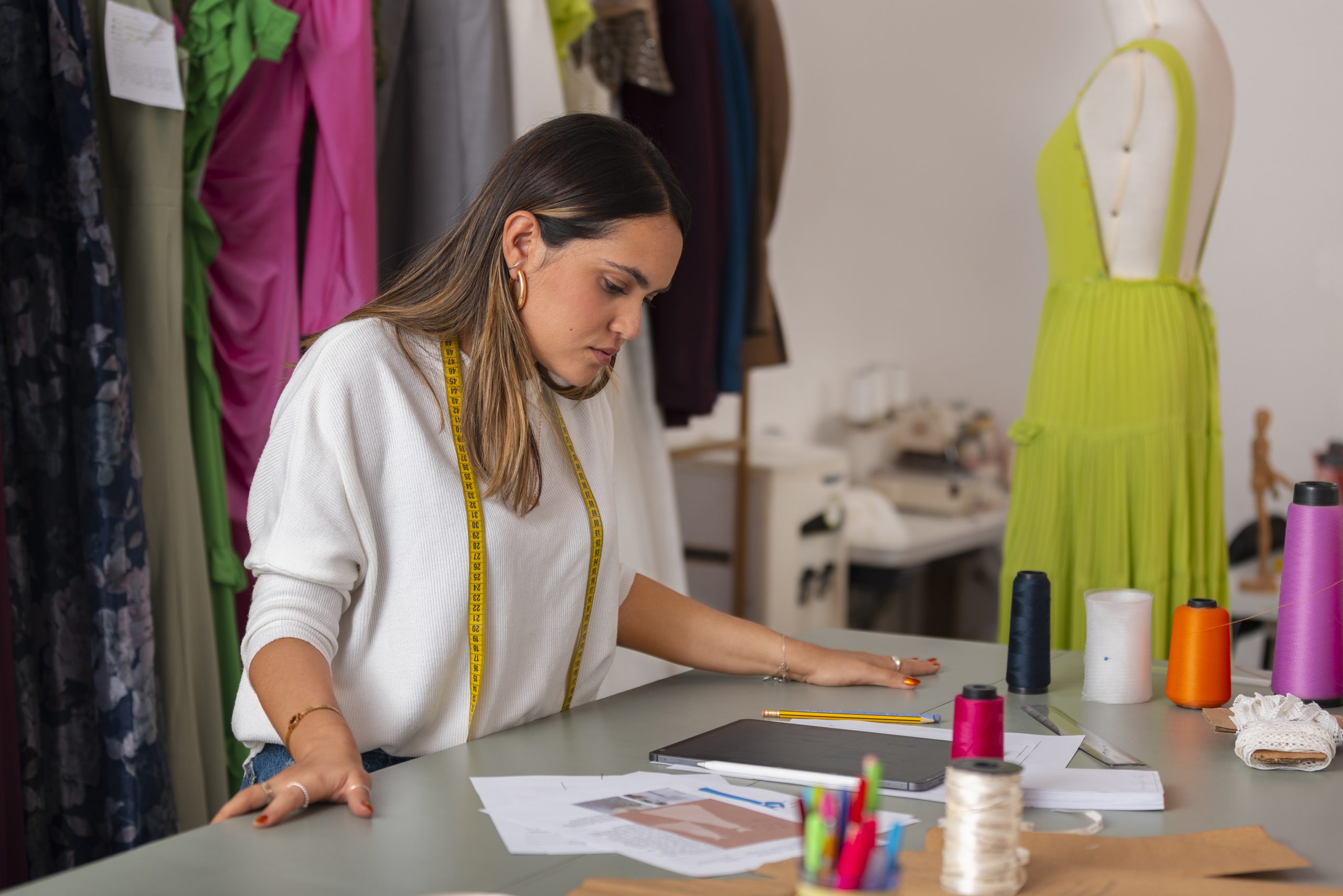
What Is a Diploma in Fashion Design?
A Diploma in Fashion Design is a career-oriented programme that introduces students to clothing design, fabrics, garment construction, fashion illustration and industry practices. It helps learners understand how a clothing concept develops from an initial idea into a finished garment.
Fashion design involves more than choosing colours or creating attractive outfits. It requires an understanding of fabric properties, body measurements, patterns, stitching methods, fashion trends and customer preferences. Students explore these areas through creative exercises and practical learning.
A Fashion Design Course can be a suitable choice for students who enjoy drawing, styling, experimenting with fabrics and developing original clothing ideas. It provides a foundation for exploring different areas of the fashion and apparel industry.
What Do You Learn in a Fashion Design Diploma?
A Diploma in Fashion Designing introduces students to the creative and technical processes involved in developing clothing and fashion products. Students learn design fundamentals, textile studies, fashion illustration, pattern making, garment construction, trend analysis and portfolio development.
The programme combines theoretical understanding with practical activities. Some important learning areas include:
- Design Fundamentals: Understanding design principles, colour theory, composition and visual aesthetics.
- Textile Studies: Learning about fabrics, materials, textures and their properties.
- Fashion Illustration: Creating drawings and visual representations of clothing concepts.
- Pattern Making: Developing garment patterns based on measurements and design requirements.
- Garment Construction: Understanding how fabric pieces are assembled into finished garments.
- Trend Analysis: Studying fashion movements, consumer preferences and changing styles.
- Fashion History: Exploring the evolution of clothing, styles and cultural influences.
- Sustainable Fashion: Understanding responsible material choices and environmentally conscious design practices.
- Portfolio Development: Presenting design concepts and completed work in an organised professional format.
These learning areas help students understand both the artistic and practical sides of fashion design.
What Are the Main Subjects in a Fashion Design Diploma?
The Fashion Designing Subjects generally cover the complete design process, from developing an idea to producing and presenting a garment. Each subject builds a different skill that contributes to a student’s understanding of the fashion industry.
1. Design Fundamentals
Design fundamentals introduce students to the basic principles of visual design. Students explore lines, shapes, forms, balance, proportion, colour combinations and composition.
These concepts help learners create clothing designs that are visually balanced and communicate a clear creative idea.
2. Textile Studies
Textile studies focus on understanding different fabrics and materials. Students learn about fabric characteristics, textures, construction and how different materials behave.
This knowledge helps designers select suitable fabrics for different garment types and design requirements.
3. Fashion Illustration
Fashion illustration teaches students how to communicate clothing ideas through drawings. Students practise sketching garments, understanding proportions and presenting design details.
Illustration is useful for explaining silhouettes, patterns, colours and styling concepts before a garment is produced.
4. Pattern Making and Garment Construction
Pattern making involves preparing the templates required to cut fabric into specific garment shapes. Garment construction focuses on assembling those fabric pieces using suitable stitching and finishing techniques.
Together, these subjects help students understand how a fashion concept becomes a wearable product.
5. Trend Analysis and Forecasting
Trend analysis helps students understand changing fashion preferences, consumer behaviour and market developments. Students explore how cultural influences, seasons and lifestyle changes affect clothing styles.
Trend forecasting helps designers develop ideas that are relevant to future fashion requirements.
6. Fashion History and Theory
Fashion history introduces students to the development of clothing and styles across different periods and cultures. It helps learners understand the social, cultural and economic influences behind fashion trends.
7. Sustainable Fashion Practices
Sustainable fashion focuses on responsible design and production. Students explore eco-friendly materials, ethical production practices and ways to reduce waste in the fashion process.
8. Portfolio Development
Portfolio development helps students organise and present their creative work. A portfolio may include fashion illustrations, mood boards, fabric experiments, garment designs and project outcomes.
It can help students communicate their abilities when applying for internships, jobs or further education.
What Is the Course Duration of a Diploma in Fashion Design?
The Diploma in Fashion Design at CVM University School of Design is listed as a three-year programme divided into six semesters. This gives students time to build their design foundation and develop creative and technical knowledge through different learning areas.
The programme details published by CVM School of Design list the following structure:
| Course Detail | Information |
|---|---|
| Programme | Diploma in Design – Fashion Design |
| Institution | CVM University School of Design |
| Location | Anand, Gujarat |
| Duration | 3 Years |
| Semester Structure | 6 Semesters |
| Eligibility | After Class 10 |
Students should confirm the latest academic structure and admission information with the university before applying.
Can You Pursue a Fashion Design Course After 10th?
Yes. Students who have completed Class 10 can explore a Fashion Design Course After 10th. A diploma programme provides an opportunity to begin learning design fundamentals and technical fashion skills at an early stage.
At CVM University School of Design, the published diploma eligibility requirement is completion of Class 10. This makes the programme an option for students interested in fashion, clothing, styling and creative work after secondary education.
Students do not need to assume that they must already be professional artists. Interest in design, willingness to practise and an eagerness to learn are useful starting points.
What Practical Skills Do Students Develop During the Course?
A Fashion Design Course Syllabus is not limited to classroom theory. Practical learning helps students understand how design concepts are developed, tested and converted into garments.
Some important practical skills include:
- Sketching and illustrating fashion ideas.
- Understanding colour combinations and fabric selection.
- Identifying different textile materials.
- Preparing patterns for garment construction.
- Learning garment assembly and finishing techniques.
- Researching fashion trends and customer preferences.
- Developing sustainable design concepts.
- Preparing and presenting a creative portfolio.
Practical exposure helps students become familiar with the stages involved in developing a fashion product. The specific studio activities and projects depend on the university’s academic plan.
Which Tools and Materials Are Used in Fashion Design?
Fashion designers work with a combination of traditional materials and digital tools. The tools selected depend on the design task, production process and working environment.
Common tools and materials include:
- Sketchbooks and Drawing Pencils: Used to develop initial fashion ideas and illustrations.
- Measuring Tapes and Rulers: Used for taking measurements and preparing patterns.
- Pattern Paper: Used to create garment templates.
- Fabric Scissors and Cutting Tools: Used for cutting textile materials.
- Sewing Machines: Used to assemble fabric pieces and construct garments.
- Fabric Swatches: Used to compare textures, colours and material qualities.
- Digital Design Software: Applications such as Adobe Illustrator and Photoshop can support digital illustrations and visual presentations.
- Mood Boards: Used to organise colours, materials, references and creative directions.
Learning to select the right tools helps students work more systematically and communicate their ideas clearly.
What Skills Are Required to Become a Fashion Designer?
A fashion designer needs a combination of creativity, technical knowledge and an understanding of customer preferences. These skills develop through practice, project work and continued learning.
Some important skills include:
- Creativity: Developing original clothing ideas and exploring different styles.
- Drawing Skills: Communicating design concepts through sketches and illustrations.
- Colour Knowledge: Selecting colour combinations that suit a design concept.
- Fabric Knowledge: Understanding material properties and suitable applications.
- Attention to Detail: Maintaining accuracy in measurements, patterns and finishing.
- Trend Awareness: Following changing styles and fashion preferences.
- Problem-Solving: Finding practical solutions during garment development.
- Communication: Explaining design ideas and working with clients or teams.
- Time Management: Organising design tasks and completing projects within deadlines.
Students can gradually develop these abilities through regular practice and feedback.
What Are the Career Options After a Diploma in Fashion Design?
After completing a Diploma in Fashion Design, students can explore entry-level opportunities in apparel design, styling, textiles, retail and related creative fields. Career options depend on individual skills, portfolio quality, practical experience and employer requirements.
Some possible career paths include:
Fashion Designer
Fashion designers develop clothing concepts, create sketches, select fabrics and contribute to garment development. They may work with fashion labels, boutiques or apparel businesses.
Fashion Stylist
Fashion stylists select clothing, accessories and complete looks for photoshoots, events, campaigns and personal styling assignments.
Textile Designer
Textile designers work on fabric patterns, prints, colours and surface designs. Their work may be used in clothing, home furnishings and other textile products.
Fashion Illustrator
Fashion illustrators create visual representations of garments, collections and styling ideas. They may work with designers, brands or creative agencies.
Pattern Maker
Pattern makers prepare templates used to cut fabric and construct garments. Accuracy and measurement knowledge are important in this role.
Retail and Merchandising Assistant
Retail and merchandising professionals support product presentation, stock planning, fashion displays and customer-focused retail activities.
Fashion Entrepreneur
Students with business interests may explore starting a boutique, custom clothing service, independent fashion label or online fashion business. Entrepreneurship requires additional knowledge of budgeting, marketing, sourcing and customer management.
Which Industries Offer Opportunities After a Fashion Design Diploma?
Fashion design skills can be applied across different parts of the apparel and lifestyle industry. Students may explore opportunities in:
- Clothing and apparel brands.
- Textile and fabric manufacturing.
- Fashion boutiques and designer studios.
- Garment production units.
- Retail and merchandising businesses.
- E-commerce fashion platforms.
- Costume and styling services.
- Independent fashion businesses.
The type of role available depends on the student’s specialisation, practical experience and portfolio.
Where Can You Study Fashion Design in Anand?
Students searching for Fashion Design Colleges in Anand can explore the programme offered by CVM University School of Design.
CVM University School of Design offers a Diploma in Fashion Design for students interested in developing creative and technical knowledge in the fashion field. Its published course information highlights design fundamentals, textile studies, pattern making, garment construction, fashion illustration, trend analysis, sustainable fashion practices and portfolio development.
The programme is listed as a three-year diploma with eligibility after Class 10. Students considering a Fashion Design Course in Anand should review the latest admission details, fee structure and academic information through the institution’s official website.
Before choosing a college, students should consider the curriculum, practical learning opportunities, studio facilities, faculty guidance and scope for developing a portfolio.
What Is the Future Scope of Fashion Design?
Fashion design offers different career directions because clothing and textiles are connected to lifestyle, retail, manufacturing and creative industries.
Changing consumer preferences, online shopping, sustainable materials and digital fashion communication are influencing how fashion businesses operate. Designers who understand both creative development and practical production can explore opportunities across these areas.
Students can also build specialised knowledge in textile design, fashion illustration, styling, garment construction, merchandising or entrepreneurship. Further education and professional experience can help them explore more advanced roles.
How Can You Start Your Journey in Fashion Design?
Students interested in fashion can begin by observing clothing styles, exploring fabrics and practising basic illustrations. A structured diploma programme can help turn this interest into practical design knowledge.
A useful starting approach includes:
- Understand basic design principles and colour combinations.
- Practise fashion sketching and garment illustration.
- Explore different fabrics and their properties.
- Learn basic pattern-making and garment construction.
- Study fashion trends and clothing styles.
- Participate in design exercises and practical projects.
- Organise completed work into a portfolio.
- Explore internships, further studies or entry-level career opportunities.
Consistent practice and curiosity can help students build confidence as they develop their fashion design skills.
Conclusion
A Diploma in Fashion Design can be a starting point for students who want to turn their interest in clothing, creativity and styling into a professional direction. The programme introduces important areas such as fashion illustration, textile studies, pattern making, garment construction, trend analysis and portfolio development.
For students looking to study fashion design in Anand, CVM University School of Design offers a three-year diploma programme with eligibility after Class 10. Understanding the course structure, practical learning areas and career possibilities can help students make a more informed decision about their next step.
Frequently Asked Questions About Diploma in Fashion Design
1. What do you learn in a Diploma in Fashion Design?
Students learn design fundamentals, textile studies, fashion illustration, pattern making, garment construction, trend analysis, fashion history, sustainable fashion and portfolio development.
2. What are the subjects in a Fashion Design diploma?
Common learning areas include colour theory, design principles, textile studies, fashion illustration, pattern making, garment construction, trend forecasting and portfolio development. The exact subjects depend on the institution’s curriculum.
3. Is a Fashion Design diploma available after 10th?
Yes. CVM University School of Design lists Class 10 completion as the eligibility requirement for its Diploma in Fashion Design programme.
4. What is the duration of a Diploma in Fashion Design at CVM University?
The published programme details list a duration of three years, divided into six semesters.
5. Do I need drawing skills to study fashion design?
Basic drawing interest can be helpful, but students can develop fashion illustration and sketching skills through practice and structured learning.
6. What practical skills are taught in a Fashion Design course?
Practical learning areas may include fashion sketching, fabric identification, pattern making, garment construction, design development and portfolio preparation.
7. What tools are used by fashion designers?
Fashion designers may use sketchbooks, pencils, measuring tapes, rulers, pattern paper, cutting tools, sewing machines and digital design applications.
8. What are the career options after a Diploma in Fashion Design?
Career options may include fashion designer, fashion stylist, textile designer, fashion illustrator, pattern maker, retail assistant and fashion entrepreneur.
9. Can I start my own boutique after a Fashion Design diploma?
Yes. A diploma can provide foundational design knowledge for starting a boutique or custom clothing business. Business planning, sourcing, pricing and marketing skills are also important.
10. Where can I study a Diploma in Fashion Design in Anand?
CVM University School of Design in Anand offers a Diploma in Fashion Design. Students can visit the official website to check current admission and programme details.
11. Is fashion design only about designing clothes?
No. Fashion design also involves textiles, fabric selection, pattern making, garment construction, styling, trend research and understanding customer preferences.
12. What is the future scope after a Fashion Design diploma?
Students can explore opportunities in apparel brands, textile businesses, boutiques, retail, styling, garment production and independent fashion ventures. Further education can support additional specialisation.