

In a world flooded with images, videos, and digital content, the ability to communicate ideas visually has become more powerful than ever. From brand logos and social media creatives to motion graphics and digital campaigns, visual communication shapes how people perceive messages every day. This growing demand has made visual communication design one of the most exciting creative career paths for students who love design, storytelling, and technology.
For students exploring design education options in Gujarat, especially around Anand, understanding what this discipline truly offers is essential before choosing a degree.
What Is Visual Communication Design?
Visual communication design focuses on conveying messages through visual elements such as typography, imagery, color, layout, and motion. Unlike fine arts, which often prioritize self-expression, visual communication is purpose-driven. Every design aims to inform, persuade, guide, or emotionally connect with an audience.
A Bachelor of Design in Visual Communication course typically blends creativity with strategy. Students learn how visuals influence human behavior, how to design for different platforms, and how to adapt ideas across print, digital, and interactive media.
This field sits at the intersection of art, media, psychology, and technology—making it ideal for students who enjoy both creative thinking and problem-solving.
Why Visual Communication Matters Today
Modern audiences scroll fast and read less. Visuals have become the first point of connection between a brand and its audience. Whether it’s an Instagram post, a website banner, or an app interface, strong visual communication can:
- Capture attention within seconds
- Simplify complex information
- Build brand identity and trust
- Influence decisions and emotions
This is why companies, startups, agencies, and media platforms actively seek trained visual communication designers who understand both aesthetics and communication goals.
What You Learn During the Program
A well-structured Bachelor of Design in Visual Communication course is designed to develop both creative skills and conceptual thinking. While subjects may vary slightly, students usually explore the following areas:
Core Design Foundations
Students begin with the basics—design principles, color theory, typography, visual composition, and drawing. These fundamentals form the backbone of all visual communication work.
Graphic and Digital Design
This includes logo design, branding systems, posters, editorial layouts, and digital creatives. Students also learn industry-standard software used in professional design studios.
Photography and Image Making
Photography plays a vital role in visual storytelling. Students understand lighting, framing, visual narratives, and image editing for both print and digital platforms.
Motion Graphics and Video Basics
With video content dominating online platforms, motion design introduces students to animation, transitions, and time-based visuals.
User Experience and Visual Thinking
Modern communication goes beyond visuals—it includes how users interact with designs. Students are introduced to UX thinking, interface design, and user-centric problem solving.
Concept Development and Storytelling
Ideas matter as much as execution. Students learn how to research, develop concepts, and translate abstract ideas into impactful visual stories.
Skills Students Develop
By the end of the program, students typically develop a balanced skill set, including:
- Visual storytelling and conceptual thinking
- Creative problem solving
- Typography and layout design
- Digital and motion design basics
- Communication and presentation skills
- Understanding of audience behavior
These skills remain valuable across industries and evolve with changing technology.
Career Opportunities After Graduation
Graduates of visual communication design have diverse career paths available. Depending on interest and specialization, they may work as:
- Graphic Designers
- Visual Communication Designers
- Brand Identity Designers
- Motion Graphic Artists
- UI/Visual Designers
- Content Creators
- Creative Strategists
Many designers also choose freelance careers or build their own studios, collaborating with brands, agencies, and startups.
With growing digitalization, demand for visual communicators continues to expand across advertising, media, education, technology, and entertainment sectors.
Studying Visual Communication in Anand
Anand has emerged as a growing education hub with increasing exposure to creative and professional programs. For students looking to study Bachelor of Design in Visual Communication In Anand, the location offers a focused academic environment while remaining well-connected to major cities.
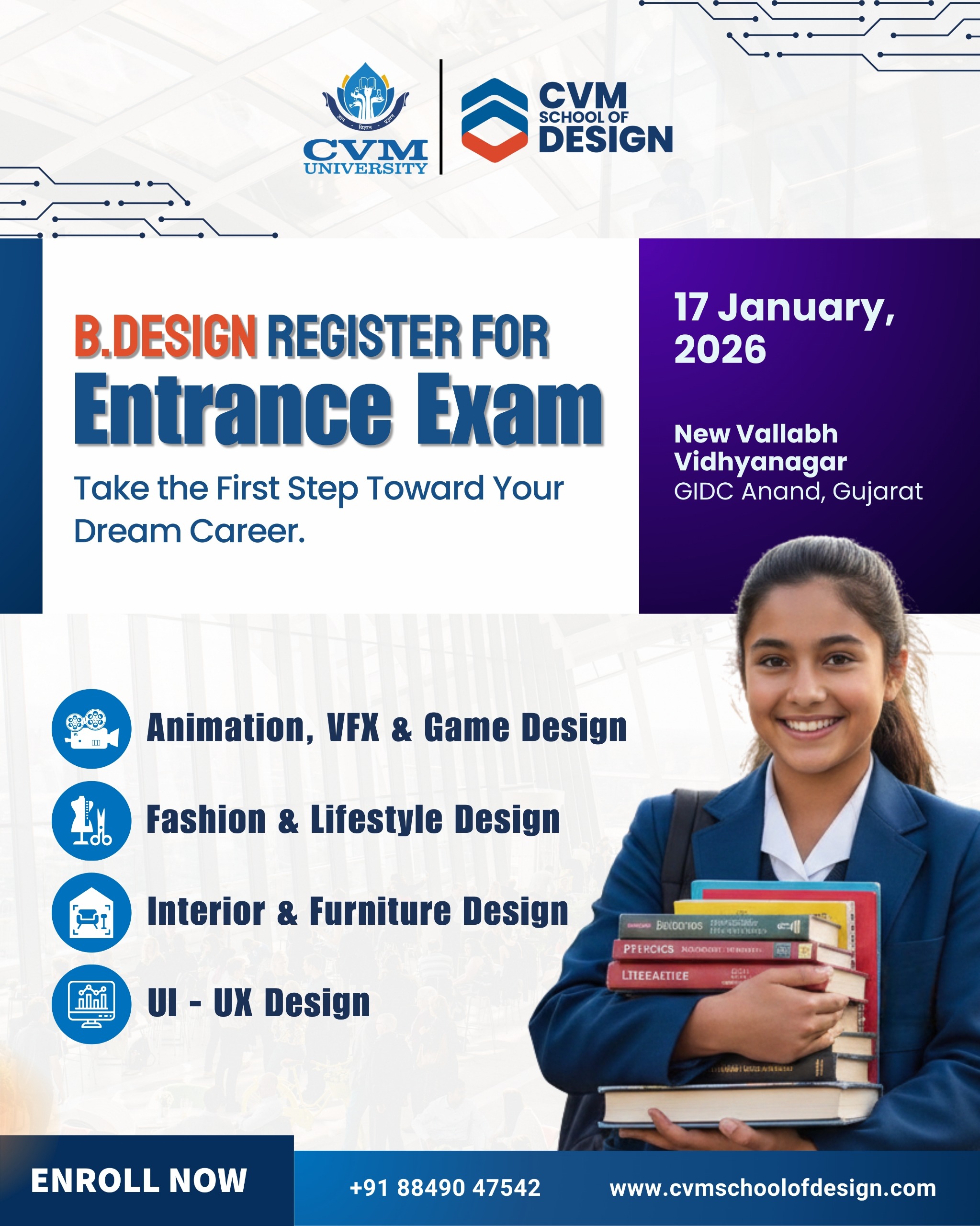
Institutions like CVM University School Of Design offer structured design education aligned with modern industry needs, providing students access to academic resources, studios, and practical learning environments. However, regardless of the institution, students should always look at curriculum depth, faculty experience, studio exposure, and project-based learning.
Who Should Choose This Course?
This program is ideal for students who:
- Enjoy creativity, visuals, and storytelling
- Are curious about media, branding, and design trends
- Want a career that combines art and technology
- Prefer hands-on learning over rote theory
- Like observing how visuals influence people
No matter your background—science, commerce, or arts—what matters most is creative curiosity and willingness to learn.
Things to Consider Before Choosing a College
When selecting a Bachelor of Design in Visual Communication college, students should evaluate more than just location or name. Important factors include:
- Curriculum relevance and updates
- Balance between theory and practical work
- Industry exposure and projects
- Portfolio development support
- Learning environment and infrastructure
A strong portfolio often matters more than marks in creative careers, so choose a place that encourages experimentation and original thinking.